
Aluminium scaffold graspers
Issued: 15/10/2026
Last Updated: 11/11/2026
MAY CONTAIN DISTRESSING CONTENT TO SOME READERS
Purpose
This safety alert highlights a recent serious incident where a worker fell 4.5 metres from a mobile scaffold and discusses the need to ensure graspers are installed securely on scaffolds so that the guardrail cannot inadvertently detach.
A grasper is a type of end fitting used on aluminium scaffold braces and guardrails to attach them to the circular profile of another scaffold tube.
Graspers include a latching mechanism that helps keep it securely connected to the tube.
Figures 1 and 2 show two examples of commonly available graspers.
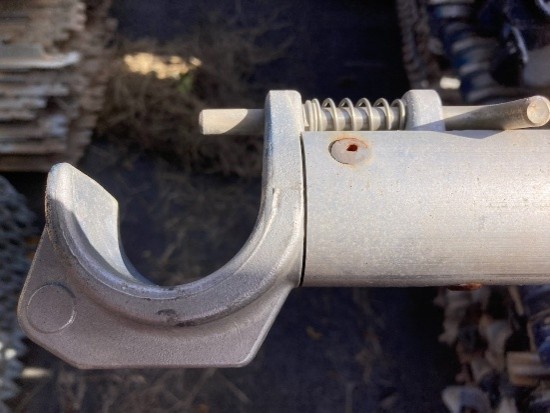
Figure 1: Spring-loaded latch type grasper.
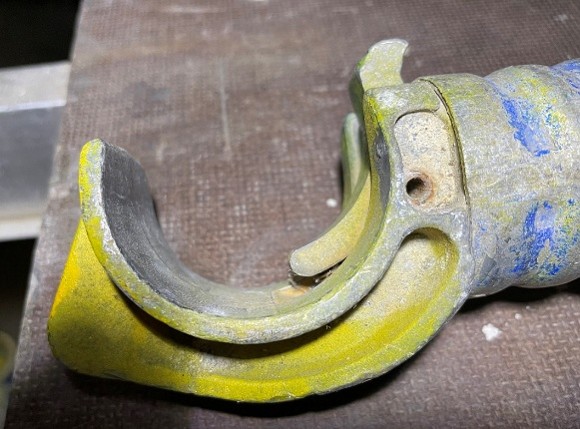
Figure 2: Automatic latching grasper.
Background
In September 2026, the grasper on one end of a top rail detached from a standard (vertical structural component of a scaffold) on an end frame. The grasper was attached to the outside of the standard (positioned on the outside facing away from the platform), rather than on the inside (the working platform side).
The locking latch on the grasper was a spring loaded “L” bolt type (shown in Figure 1) that typically needs to be manually pulled back to detach the grasper from the scaffold tube.
While the incident is still under investigation, one possible cause is that the worker’s clothing caught on the latch handle and opened it, causing the grasper to become unsecured from the scaffold tube.
In another serious incident in 2023, a worker fell from a platform when the top rail inadvertently detached as the worker climbed up, out of the trapdoor and onto the working deck.
As the worker moved upwards it appears part of their clothing snagged on the top rail and pulled the grasper off the end frame transom (horizontal structural component of a scaffold in between standards).
The worker then overbalanced and fell sideways towards the top rail, which was no longer secured, and off the scaffold deck. Inspection of the grasper showed the automatic latching mechanism was faulty and had not locked the grasper in place. The spring on the latching devices was broken.
The type of automatic latch grasper in this incident can be seen in Figure 2.
Incidents like these illustrate the potential risk of a fall from height due to unintentional opening of the latch or use of a faulty latch on a grasper. In the case of the automatic latch, once the grasper has been installed on the scaffold it is difficult to see if the latching mechanism is working properly and/or if the latch is engaged.
These findings are not yet confirmed, and investigations are continuing into the exact cause.
Action required
Manufacturers, importers and suppliers of mobile scaffold have duties to provide appropriate and sufficient information on the safe use of plant. This information should consider common industry practices and any reasonably foreseeable misuse of the scaffold, whether unintentional or intentional.
Edge protection is provided as a control measure to prevent workers falling from height. It is critical that edge protection is installed correctly and maintained.
Most modular aluminium scaffold systems allow some or all guardrails to be fitted to the standards. When manufacturer’s instructions show edge protection rails fitted to standards, the grasper should be fitted on the working platform side of the standard. This ensures that any outwards force applied from the working platform is applied to the throat of the grasper and not to the latch (refer Figure 3 for correct example and Figure 4 for incorrect example).
Manufacturer’s instructions should be reviewed to ensure they specify the preferred arrangement is with the grasper body on the working platform side of a standard.
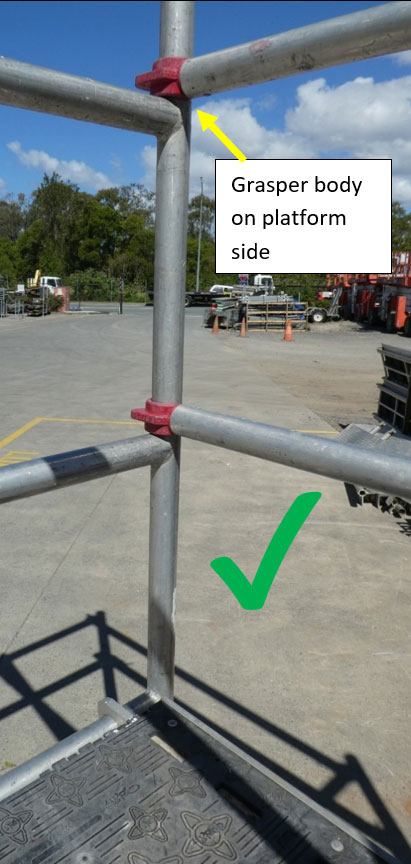
Figure 3: Correct way of fitting grasper to standard (note: toe board omitted for clarity).
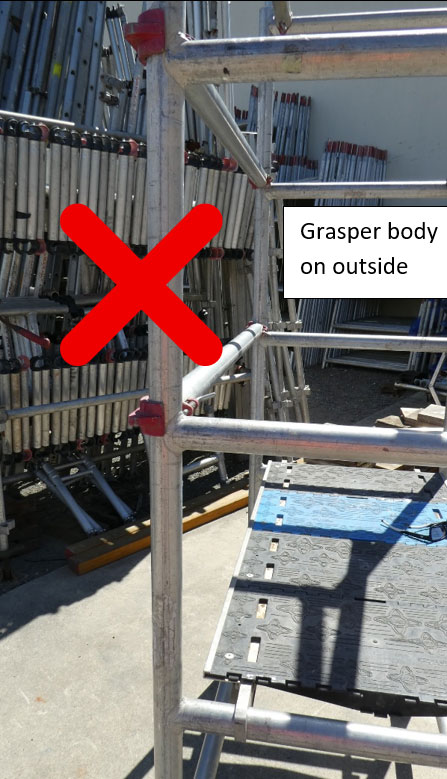
Figure 4: Incorrect way of fitting grasper to standard (note: toe board omitted for clarity).
When mobile scaffolds are used for non-standard applications, such as edge protection for an adjacent floor level or working deck, careful consideration should be given to the direction of loading on the guardrails and any additional risks created.
Advice should be sought from the scaffold manufacturer, supplier, installer or a professional engineer with the relevant scaffolding expertise to ensure appropriate risk control measures are implemented (e.g. the use of check-couplers to prevent inadvertent movement).
Where a guardrail is fitted to a transom it is to be fitted in such a way so that a standard prevents the grasper sliding off the transom when an outwards load is applied from the working platform (refer Figure 5).
Note: Handrails are to comply with the loading and deflection requirements specified in Australian/New Zealand Standard AS/NZS 1576.1:2019 Scaffolding Part 1: General requirements, regardless of their orientation.
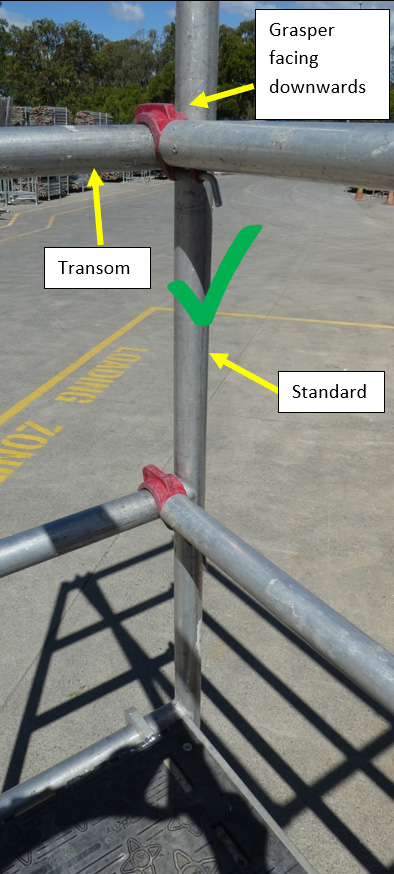
Figure 5: Correct way of fitting grasper to transom end frame – outwards load applied to the standard (note: toe board omitted for clarity).
The grasper should be fitted in the orientation that provides the greatest resistance to imposed loads.
This is consistent with the way edge protection is fitted to tube and fitting scaffold. Scaffold tube used as edge protection on a working platform should be fitted to the inside of a standard to ensure the structural integrity of the edge protection is not solely based on the scaffold coupler (i.e. the scaffold standard resists outward force applied to the guardrail).
A similar safety principle applies to timber guardrail systems. Guardrails nailed to timber posts are attached on the working platform side of the post so that outwards force is transferred directly to the post and not as a pull load on the nails.
More information
- Scaffolding Code of Practice 2021 (PDF, 1.75 MB)
- Work Health and Safety Regulation 2011
- AS/NZS 1576.1:2019 Scaffolding Part 1: General requirements