
Worker fatally injured when trapped in an elevated scraper
MAY CONTAIN DISTRESSING CONTENT TO SOME READERS
In late 2025, a worker sustained fatal crush injuries when they became trapped between the floor cylinder rod end and the back wall of the scraper bowl of an elevated scraper.
It appears the worker and two other workers were undertaking the removal of the hydraulic ram from the elevated scraper. Early indications suggest that the hydraulic system had residual pressure when released causing the scraper bin arm to lower.
Investigations into the incident are ongoing.
These findings are not yet confirmed, and investigations are continuing into the exact cause.
Safety issues
Machinery that uses hydraulics to assist movement has the potential to cause death or serious injury. Hydraulics are used across industries for trucks and transport, construction plant and equipment, farming machinery, manufacturing equipment and amusement rides.
Serious crush injuries can result from normal movement of the hydraulic equipment, the releasing of pressure when working on hydraulic systems and when the hydraulic systems fail, (from falling loads or unexpected moving parts). Plant arms or equipment can cause injury through rapid or slow movement, with or without the person being aware of the danger.
Contributing factors that may result in workers or others being crushed by hydraulics or loads supported by hydraulics could include:
- Malfunctioning or broken controls
- entering the potential crush zone (e.g. leaning over the chassis rail on a truck tipper)
- working under plant supported by hydraulics without a back-up prop or stand
- removing components while working in a potential crush zone (e.g. disconnecting hydraulic fittings)
- failed hydraulic components such as hoses, pipes and valve bodies
- untrained workers operating controls
- failing to lock-out/tag-out, locking the vehicle cabin, or removing the keys.
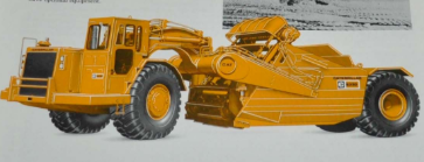
Image of elevated scraper
Ways to manage health and safety
Effective risk management starts with a commitment to health and safety from those who manage the business. If an incident occurs, you will need to show the regulator that you have used an effective risk management process. This responsibility is covered by your primary duty of care in the Work Health and Safety Act 2011.
Use the hierarchy of controls to help decide how to eliminate and reduce risks in your place of work. The hierarchy of controls ranks types of control methods from the highest level of protection and reliability to the lowest. It is a step-by-step approach to eliminating or reducing risks. You must work through the hierarchy of controls when managing risks, with the aim of eliminating the hazard, which is the most effective control.
Further information about the hierarchy of controls and managing risks can be found on the WorkSafe.qld.gov.au website: Managing risks.
Possible control measures to prevent similar incidents
The Work Health and Safety Regulation 2011 provides specific duties for persons conducting a business or undertaking (PCBU), which involves management or control of plant - including requirements to manage the health and safety risks associated.
The person with management or control of plant at a workplace, must ensure maintenance, inspection, and if necessary, testing of plant be carried out by a competent person.
Before accessing any parts of the plant (including elevated scrapers) for cleaning, maintenance or repairs, all hazards must be identified and adequately controlled. Inspection should be conducted in accordance with a regular maintenance system to identify:
- potential problems not anticipated during plant design or task analysis
- deficiencies in plant or the equipment associated with use of the plant (for example wear and tear, corrosion, cavitation from oil leaks and damaged plant parts)
- adverse effects of changes in processes or materials associated with plant
- uneven ground or unloading / loading aprons
- inadequacies in control measures previously implemented.
Safe systems of work
A safe system of work should be implemented to manage the risks associated with the inspection and maintenance of the plant. The plant must be maintained and repaired according to the manufacturer’s specifications. If you identify deficiencies in the specifications, you should contact the manufacturer.
A safe system of work can include, but is not limited to:
When operating plant or machinery that use hydraulics:
- never place yourself or others in a position where you could be crushed if hydraulics fail, or they are inadvertently used.
- When working on equipment, assess how it could shift if it were to move unexpectedly, and avoid working with any part of your body in the danger zone.
- Find alternative ways to access the equipment to maintain it, keeping workers out of the danger zone.
- always read the instructions provided by the manufacturer and follow all safety directions, including:
- the types of suitable supports needed to be put in place in accordance with manufacturers service procedures to prevent any movement that may cause risk to people preforming the work.
- if a back-up safety system is provided on the plant, ensure it has been correctly installed and is always in use before entering a high-risk zone.
- if a remote control or remote control panel is installed, ensure it is functioning as designed, has an e-stop, and is worn or used in a way that prevents accidental actuation of the remote controls.
- if a safety system is not provided on the machine, make sure you use an alternative system specified by the manufacturer or competent person.
- ensure workers working on, near, or under hydraulics are adequately trained and supervised. A safe work procedure should outline the potential risks of working on or near hydraulic equipment and the likely consequences of hydraulic failure.
Ensuring the plant, or part of the plant that could move, is adequately secured to prevent unexpected movement. This could include:
- installing mechanical locks to support parts suspended by hydraulic systems.
- using props, blocks, or chocks in accordance with the manufacturer’s safety instructions.
- using purpose-designed and engineered support stands, jigs, or cradles.
- Ensuring props, stands or other back-up support devices cannot be ejected if the hydraulics fail or move (e.g. this can occur if side loading is applied).
- warning alarms and hazardous area markings.
Consulting with the manufacturer, workers, and others involved in the work to obtain feedback on the plant’s associated work processes and safe work procedures.
- Ensure there is sufficient space for safe access to the plant for maintenance and repair activities.
- Never operate broken or worn equipment.
- Develop an isolation procedure (known as lock-out/tag-out) which should be followed by workers when they are required to perform maintenance, repair, and cleaning of plant.
- Isolation procedures involve isolating potentially hazardous energy, so the plant does not move or start up accidentally.
- Isolating plant may also ensure entry to a restricted area is controlled while the specific task is being carried out.
- Educate and train operators on how to use the plant (i.e., induct operators appropriately, including appropriate supervision for new operators). Additional training and supervision is needed for young or inexperienced workers.
- Consider the operating environment (i.e., wet weather, heat, cold, ground conditions).
- Ensure all energy sources are isolated where required prior to conducting work.
Any remaining risk must be minimised with suitable personal protective equipment (PPE). For example, providing workers with steel cap boots, high visibility vests and protective eyewear.
The control measures you put in place should be reviewed regularly to make sure they work as planned.
More Information
- Managing risks of plant in the workplace Code of Practice 2021 (PDF, 2.77 MB)
- How to manage work health and safety risks Code of Practice 2021 (PDF, 0.6 MB)
- Hydraulic safety (PDF, 0.85 MB)
- Guide to machinery and equipment safety (PDF, 1.46 MB)
If this information has caused distress, there are services to help:
- Lifeline – 24/7 crisis support service, including phone, texting and chat services.
- Beyond Blue – information and support for anxiety, depression and suicide prevention for everyone in Australia.
- Black Dog Institute – research and resources on mental health in the workplace.
- SANE – helpline service, as well as resources on mental health.
Have you been affected by a workplace fatality, illness or serious injury?
For advice and support: