
Member of the public injured by falling tree
MAY CONTAIN DISTRESSING CONTENT TO SOME READERS
In early 2026, a member of the public was injured when a tree being felled at a residential property, struck their motor vehicle while they were driving past.
Initial enquiries indicate tree removal works were being undertaken at the property involving the felling of several trees.
During the felling process, one tree fell across the road, striking the passing motor vehicle and nearby powerlines.
Investigations are continuing.
These findings are not yet confirmed, and investigations are continuing into the exact cause.
Safety issues
Felling of trees can be dangerous, particularly when the associated risks are not adequately controlled. When manually cutting trees, the feller normally stands at the base to operate the chainsaw and moves to a safe position once the tree begins to fall.
Common hazards and risks associated with felling trees using a chainsaw can include, but are not limited to:
- hazardous trees, including damaged, fire-affected, hollow, non-symmetrical or leaning trees.
- escape routes not clearly identified or prepared in advance.
- being struck by the butt of the tree or the tree not falling in the intended direction
- unsuitable ground conditions, slopes, or environmental conditions (e.g. wind)
- falling objects e.g. limbs, dry stags, dead and brittle tops (i.e. widow makers).
- kickback or recoil from the chainsaw
- unsuitable felling procedures or lack of appropriate planning and equipment.
Other related hazards can include:
- undertaking tree trimming or vegetation management in the vicinity of overhead electric lines
- lack of an exclusion zone around the tree drop zone to keep workers and members of the public at a safe distance.
Ways to manage health and safety
Effective risk management starts with a commitment to health and safety from those who manage the business. If an incident occurs, you will need to demonstrate to the regulator that you have used an effective risk management process. This responsibility is covered by your primary duty of care in the Work Health and Safety Act 2011.
Use the hierarchy of controls to help decide how to eliminate and reduce risks in your place of work. The hierarchy of controls ranks types of control methods from the highest level of protection and reliability to the lowest. It is a step-by-step approach to eliminating or reducing risks. You must work through the hierarchy of controls when managing risks, with the aim of eliminating the hazard, which is the most effective control.
Further information about the hierarchy of controls and managing risks can be found at managing risks
Possible control measures to prevent similar incidents
A person conducting a business or undertaking (PCBU) must ensure, so far as reasonably practicable, that workers and other persons are not exposed to risks arising from tree felling and associated vegetation management activities.
Where appropriate, consider substituting the task of manual felling with mobile plant designed for mechanical felling. An example of this is to use a forestry harvester. However, this may not be reasonably practicable in many circumstances.
- Where the tree cannot be clear felled. For example, an Elevating Work Platform (EWP) may be required to remove the crown or other parts of the tree before it can be safely felled in the required direction. An EWP must not be used as a crane or to support any part of the tree during the felling or rigging processes. Note: An EWP may be assessed as a suitable alternative then climbing the tree to remove the crown.
See figure 1
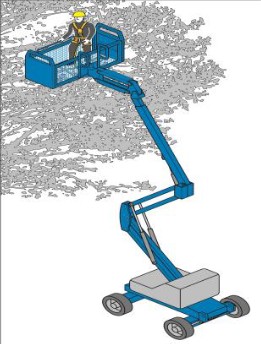
Figure 1: A boom-type elevating work platform
- Other mobile plant or ropes and cable type tensioning systems may be used to help ensure the tree will fall in the desired direction. For example, bulldozers or excavators fitted with Level 2 Falling Objects Protective Structure (FOPS). Note: the use of mobile plant and cable type systems as alternatives where clear felling is not possible may also be considered engineering control measure.
All equipment used in the felling process, including mobile plant and tensioned ropes or cable systems, must be suitable for the task. For example, cables and connectors between the tree and the plant must have adequate strength and be long enough to allow the plant to remain at a distance of at least twice the height of the tree.
If a chainsaw is selected, it must also be suitable for the task and the size of the tree – refer to the manufacturer's recommendations and limitations on use. The chainsaw and its use should comply with the requirements of AS 2727:1997 Chainsaws – Guide to safe working practices.
Chainsaws must be equipped with a reliable off switch, chain catcher, rear hand guard, anti-vibration handle mountings, throttle lockout, efficient muffler, chain brake, and front hand guard.
Safe system of work
Develop a safe system of work for tree felling. This may include, but is not limited to, the following:
- A thorough tree inspection should be carried out by a competent person, such as a trained arborist or another person who can demonstrate the required competence. The inspection should include an assessment of the tree’s structure, growth habit, stability, and growing environment. The inspection should consider hazards, condition, wind loading, structural integrity, and location.
- Ensuring the area around the base of the tree is cleared to provide sufficient area to carry out the work and to allow safe escape routes.
- Ensuring the felling zone is maintained around the tree being felled. The felling zone should extend in all directions to a radial distance of at least two times the height of the tallest tree and be maintained between the feller(s) and all other persons.
- Exclusion zones should be placed around the drop/felling zone to keep the public and workers at a safe distance. Consider using physical barriers as well as signage.
- Where the exclusion zone includes a public road, a road closure should be carried out in accordance with the Queensland Manual of Uniform Traffic Control Devices (MUTCD).
- Safety signs are clearly legible and in positions which give adequate warning to anyone approaching the area.
- Tree felling adjacent to energised powerlines and associated hardware must not occur within the exclusion distances specified in the Electrical Safety Regulation 2026. Conduct a site-specific risk assessment that considers:
- the type of plant and equipment or tools being used
- the work site and weather conditions
- the type of work being undertaken, including set-up and pack-up procedures.
- Ensure workers are adequately trained including in emergency procedures, working near electric lines, the operation of equipment, work tasks, and communication protocols.
- Ensure weather conditions, including heat, humidity, and wind speed, are assessed before work commences and monitored throughout the task to ensure conditions remain suitable to continue working.
- Consult with workers when determining how to manage the risks associated with tree removal. This should occur prior to the commencement of work, for example, through a documented toolbox talk.
- Depending on the task, equipment and conditions, any remaining risk must be minimised with suitable personal protective equipment (PPE). PPE should only be relied upon when it is not practicable to use other methods to control risks. PPE may include hard hats, gloves, protective footwear, eye protection, hearing protection, high-visibility clothing, and cut-resistant leg protection. Note: Administrative control measures and PPE rely on human behaviour and supervision, and used on their own, tend to be least effective in minimising risks. The control measures you put in place should be reviewed regularly to make sure they work as planned.
More Information
- Working safely as an arborist near powerlines (PDF, 1.36 MB)
- Managing the risks of working around trees
- How to manage work health and safety risks Code of Practice 2021 (PDF, 0.6 MB)
- Electrical Safety Code of Practice 2020 Working near overhead and underground electric lines (PDF, 0.55 MB)
- Queensland Manual of Uniform Traffic Control Devices (MUTCD) - Department of Transport and Main Roads
- Guide for tree trimming and removal work – crane access method
If this information has caused distress, there are services to help:
- Lifeline – 24/7 crisis support service, including phone, texting and chat services.
- Beyond Blue – information and support for anxiety, depression and suicide prevention for everyone in Australia.
- Black Dog Institute – research and resources on mental health in the workplace.
- SANE – helpline service, as well as resources on mental health.
Have you been affected by a workplace fatality, illness or serious injury?
For advice and support, visit our Facebook page or email ohs.coronialliaison@oir.qld.gov.au.