
Mobile cranes and tree removal
Issued: 27/8/2025
Last Updated: 28/8/2025
Purpose
This safety alert highlights the danger involved when using mobile cranes, including vehicle loading cranes, to remove trees.
In April 2025, a twin steer bogie-drive prime mover overturned when a large vehicle loading crane (VLC) mounted on the vehicle was being used to lower a tree to the ground.
Initial inquiries indicate the crane was attached to the tree while a chainsaw was being used to cut the tree trunk just above the ground.
The tree was approximately 20 metres in height with a trunk diameter of approximately 0.58m at its base.
After being cut, the tree applied a side load to the crane and the prime mover fell over and onto its side resulting in a number of parked cars being damaged.
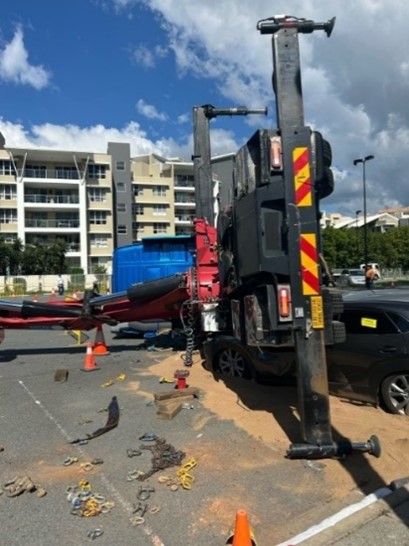
Figure 1: Overturned prime mover and VLC
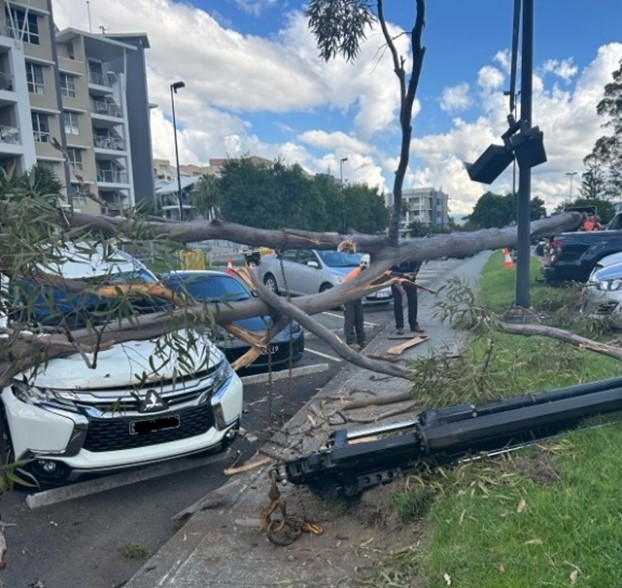
Figure 2: Tree and end of crane boom
In June 2025, an 80-tonne maximum rated capacity hydraulic all terrain mobile crane was spun around and fell over so that the boom became lodged in the fork of a gum tree. The crane was being used to lower the trunk and crown of a dead tree after the trunk was cut. The tree became unstable and applied a side load to the crane.

Figure 3: Overturned all terrain mobile crane
Contributing factors
The causes of these incidents are being investigated. Removal of trees with cranes is very high risk due to the increased risk of the crane overturning or structural failure of the boom. During the activity, it is difficult to determine the mass of the part of the tree being cut, the location of the centre of gravity and the direction in which the tree may move after the trunk is cut. In addition, it is extremely difficult to eliminate shock loading that will be applied to the crane.
Even a light wind will also apply side loading to the tree and the crane, that can be very difficult to calculate. Safe crane operation requires that only vertical loads be applied to the hoist rope and the lifted load being applied gradually. This requirement is generally stated in crane manufacturer’s instructions.
Action required
The use of cranes for tree removal, where the trunk and crown of a tree are lowered after the trunk is cut, is high risk and their use for this activity should be avoided. Mobile cranes should not be used for tree work unless the following can be ensured (refer section 12.4 of the Mobile crane Code of Practice 2024 (PDF, 2.29 MB):
- the crane operator does not perform the role of a dogger
- a dogger is present during all lifting activities
- the arborist, crane operator and dogger consult with each other before the lift
- during the lifting activity, clear communication between the arborist and the dogger is maintained
- side loading will not be applied to the crane boom
- any loading to the crane is less than 50 per cent of the crane’s rated capacity
- the crane will not be shock-loaded
- the maximum allowable wind speed is specified by a competent person
- only vertical loads will be applied to the hoist rope and crane hook
- at completion of the saw cut, the radius of the load will not increase
- outriggers and stabilisers1, where fitted, are extended according to load chart instructions with feet lowered onto timbers or pads before the crane is used for lifting
- prior to any lifting, a detailed documented lifting procedure is prepared with endorsement by the arborist, crane operator and dogger.
1Stabilisers and outriggers both increase a mobile crane’s stability when deployed. Outriggers lift the vehicle’s wheels off the ground, while stabilisers do not.
More Information
- Work Health and Safety Act 2011
- Work Health and Safety Regulation 2011
- Mobile crane Code of Practice 2024 (PDF, 2.29 MB)
- Workplace Health and Safety Queensland, Guide for tree trimming and removal work – crane access method (1 June 2015)
- Safe Work Australia Guide to managing risks of tree work (March 2023).
Have you been affected by a workplace fatality, illness or serious injury?
For advice and support, visit our Facebook page or email ohs.coronialliaison@oir.qld.gov.au.
If this information has caused distress there are services to help:
- Lifeline – 24/7 crisis support service, including phone, texting and chat services.
- Beyond Blue – information and support for anxiety, depression and suicide prevention for everyone in Australia.
- Black Dog Institute – research and resources on mental health in the workplace.
- SANE – helpline service, as well as resources on mental health.