
Workplace fatality: Overturned telehandler
MAY CONTAIN DISTRESSING CONTENT TO SOME READERS
This incident alert has been developed following a recent farm incident involving a telehandler operating adjacent to a farm surge dam, which resulted in a workplace fatality.
The incident highlights the serious risks associated with operating telehandlers and other mobile plant near water, particularly where proximity to embankments, ground conditions and safe operating practices may affect vehicle stability.
This alert serves as a reminder to farmers, operators and persons conducting a business or undertaking (PCBUs) of the importance of identifying and managing these risks to help prevent rollovers, loss-of-control events and other potentially fatal incidents.
These findings are not yet confirmed, and investigations are continuing into the exact cause.
Safety issues
Telehandlers, short for telescopic handlers, are versatile hydraulic lifting units often used in the farming and agriculture sectors.
Modern telehandlers are manoeuvrable hybrid units that offer the load lifting capabilities of a forklift with the lifting range of a crane. Units are equipped with a telescopic boom that can be fitted with a wide range of attachments to allow the unit to perform a wide variety of functions.
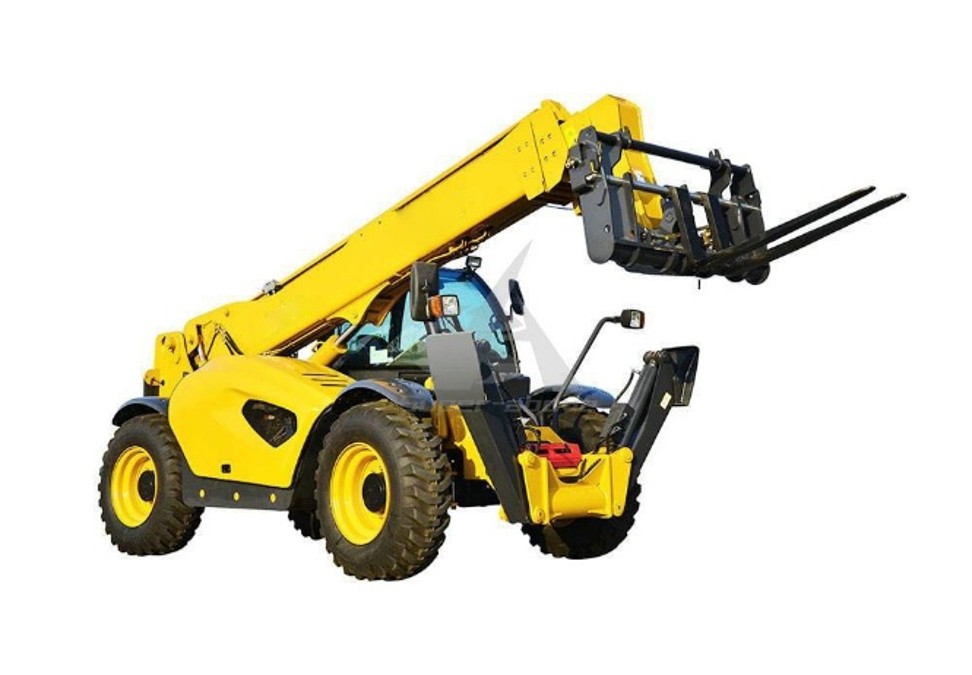
Image of telehandler
Telehandlers pose a number of risks, including:
- the plant overturning
- the plant colliding or contacting people or objects such as other vehicles or plant and energised powerlines
- objects falling on the operator
- the operator being ejected from the plant.
Ways to manage health and safety
Effective risk management starts with a commitment to health and safety from those who manage the business. If an incident occurs, you will need to show the regulator that you have used an effective risk management process. This responsibility is covered by your primary duty of care in the Work Health and Safety Act 2011.
Use the hierarchy of controls to help decide how to eliminate and reduce risks in your place of work. The hierarchy of controls ranks types of control methods from the highest level of protection and reliability to the lowest. It is a step-by-step approach to eliminating or reducing risks. You must work through the hierarchy of controls when managing risks, with the aim of eliminating the hazard, which is the most effective control.
Further information about the hierarchy of controls and managing risks is available.
Safe use of telehandlers on farms
Operating a telehandler near dams, irrigation channels, creeks, wetlands, drainage ditches and flooded areas presents additional risks beyond normal telehandler operation. The main hazards are rollover, bogging, loss of traction, collapse of embankments and operator entrapment if the machine enters the water.
Key safety practices
Assess the ground before starting work
- Inspect banks, edges, levees and embankments for erosion, undercutting, soft soil or recent flood damage.
- Do not assume the ground at the water’s edge will support the machine’s weight.
- Identify hidden hazards such as washouts, holes, culverts or submerged obstacles.
Keep a safe distance from water edges
- Stay well back from dam walls, creek banks and drainage channels where possible.
- The heavier the load and the softer the ground, the greater the setback distance should be.
- Avoid positioning the telehandler where a bank failure could cause the machine to slide or roll into the water.
Travel with the boom low
- Keep the boom lowered during travel.
- Carry loads as low as practical to maintain a low centre of gravity and maximise stability.
- Avoid sudden turns, braking or acceleration on uneven ground.
Take extra care on slopes
- Avoid travelling across slopes adjacent to water.
- Travel straight up or down slopes where possible.
- Do not turn while on a slope.
- Follow the manufacturer’s instructions regarding travel direction with and without loads.
Use seat belts and rollover protection
- Always wear the seat belt if the telehandler is fitted with a ROPS/FOPS-protected cab.
- In a rollover, the seat belt helps keep the operator within the protective zone of the cab.
Avoid overloaded or extended lifts near water
- Extending the boom significantly increases overturning risk.
- Check load charts and never exceed rated capacities.
- Be especially cautious when lifting near soft or uneven ground.
Maintain visibility
- Waterways often have vegetation, fences, pumps, livestock and people nearby.
- Ensure mirrors and windows are clean and visibility aids are functioning.
- Use a spotter if visibility is restricted.
Keep other persons clear
- Keep all other persons away from the operating area.
- Establish exclusion zones when loading, lifting or working close to water.
Do not carry passengers unless the telehandler is specifically designed for it
- Never carry passengers in the cab, on the forks, in buckets, on pallets, on attachments or anywhere else on the machine unless the manufacturer has specifically designed and approved a passenger seat for that purpose.
- Telehandlers are generally designed for a single operator and do not provide safe seating, restraint systems or protection for additional riders.
- Passengers can fall from the machine, be struck by moving parts or be crushed during sudden movements, collisions or rollovers.
- If personnel need to be lifted, only use a manufacturer-approved work platform and follow all applicable safety requirements and operating procedures.
Emergency preparedness
If telehandler work must occur near significant water hazards:
- Ensure operators know emergency procedures.
- Maintain reliable communication.
- Consider rescue arrangements where there is a risk of immersion.
- Avoid working alone in remote areas where a rollover into water could go unnoticed.
- Include these controls as part of the farm’s risk assessment and safe work procedures.
Pre-start checklist for work near water
Inspection is one of the best tools available to identify hazards and assess any associated risks before accidents occur. Before working near water, a pre-start checklist should be developed and include:
- Ground inspected and stable
- Safe setback distance from water edge established
- Weather and recent rainfall considered
- Boom lowered for travel
- Load within rated capacity
- Seat belt worn
- Exclusion zone established
- No passengers carried unless the telehandler is specifically designed and approved for passenger transport
- Personnel lifting only undertaken using an approved work platform and appropriate procedures
- Communication available in an emergency
- Operator trained and competent on the specific telehandler model and attachment being used
A practical rule on farms is, if the ground near the water’s edge appears soft, cracked, recently eroded or otherwise uncertain, telehandlers should be kept well clear of the area and an alternative method used to access the area.
Most serious telehandler incidents are linked to a loss of stability or overturning often involving poor ground conditions inadequate hazard assessment or unsafe operating practices. These incidents can place operators and others at significant risk.
More Information
- Managing risks of plant in the workplace Code of Practice 2021 (PDF, 2.77 MB)
- Rural plant Code of Practice 2024 (PDF, 1.73 MB)
- Work health and safety consultation, co-operation and co-ordination Code of Practice 2021 (PDF, 0.54 MB)
- Children on farms
- Child safety on farms checklist
- Safe play areas on farms: A resource package
- Get going. Moving kids safely on farms (booklet)
- Child safety on farms guideline (booklet)
- Child safety on farms: priorities for best practice (presentation)
- Child safety on farms (case studies)
- Managing the work environment and facilities Code of Practice 2021 (PDF, 0.5 MB)
- Onsite traffic management self-assessment tool (PDF, 0.36 MB)
- Onsite traffic management (PPTX, 1.24 MB) (PowerPoint presentation)
If this information has caused distress, there are services to help:
- Lifeline – 24/7 crisis support service, including phone, texting and chat services.
- Beyond Blue – information and support for anxiety, depression and suicide prevention for everyone in Australia.
- Black Dog Institute – research and resources on mental health in the workplace.
- SANE – helpline service, as well as resources on mental health.
Have you been affected by a workplace fatality, illness or serious injury?
For advice and support: